
how Evolution
Happens
Our research provides a new theory of how evolution happens, empirical results supporting this theory, mutation-detection methodologies and mathematical models of evolution.
Read moreWho we are?

- Principal Investigator
- Princeton University Ph.D.
- Princeton University M.A.
- Stanford University, B.S
Adi received his undergraduate degree in Biology at Stanford University and his Masters and Ph.D. in Ecology and Evolutionary Biology at Princeton Univ-ersity. He was then a Miller Fellow at the Miller Institute for Basic Research in Science at UC Berkeley, hosted by Christos Papadimitriou at the Computer Science Di-vision. Under Adi's directorship, the lab studies evolution from both a theoretical and an empirical perspective, focusing on the role of mutational and recombinational mechanisms in evolution. We also work at the interface of Evolutionary Biology and Theoretical Computer Science.
The
Research
The mixability theory for the role of sexual recombination in evolution
For nearly a century, theoretical research on the role of sexual recombination in biological evolution has been guided by a tacit assumption that sex should somehow facilitate the increase in the population mean fitness measure as defined in population genetic models, even though this measure does not explicitly represent biological structure. The mixability theory for the role.
Read more
Implications

Nature is "thinking"
We are overturning a 100-year-long dogma about the fundamental question of how evolution happens. Mutations are not random after all. This affects most deeply one of the most important questions in science, with far reaching implications. Evolution is a “smart system.” This changes our understanding of how we came to be.
Cancer and genetic disease
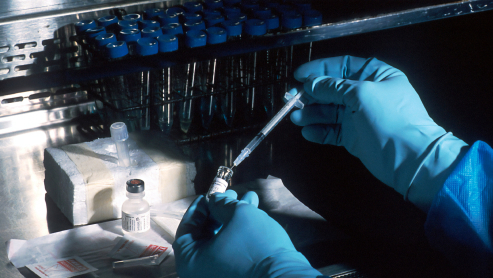
Mutations drive cancer and genetic disease. We have discovered that mutations are not accidental. Therefore it's important to study mutational mechanisms – not only in order to understand evolution, but also in order to understand better cancer and genetic disease. New ways of thinking about them may lead to new ways of battling disease.
Global deep learning (AI) revolution
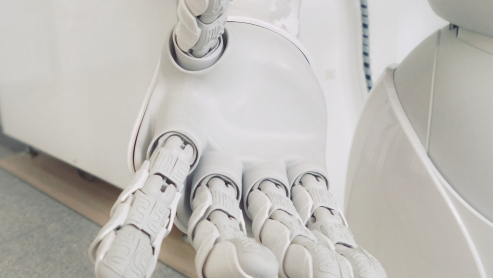
People have been using inspiration from biology and evolution to develop methods of computing – artificial intelligence, deep learning, artificial neural networks, genetic algorithms. My theoretical research has already inspired an advance that allowed for the global deep learning (AI) revolution. Because so far AI used only an early part of my theory for inspiration.
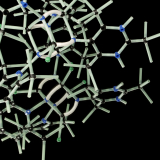
Interaction-based evolution
People have been using inspiration from biology and evolution to develop methods of computing – artificial.
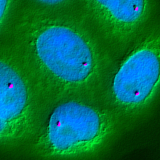
A method for identifying mutations
People have been using inspiration from biology and evolution to develop methods of computing – artificial.
blog




links
People have been using inspiration from biology and evolution to develop methods of computing – artificial intelligence, deep learning, artificial neural networks, genetic algorithms. My theoretical research has already inspired an advance that allowed for the global deep learning (AI) revolution. Because so far AI used only an early part of my theory for inspiration.
Learn more