

Nature is "thinking"
For nearly a century, theoretical research on the role of sexual recombination in biological evolution has been guided by a tacit assumption that sex should somehow facilitate the increase in the population mean fitness measure as defined in population genetic models, even though this measure does not explicitly represent biological structure. The mixability theory for the role of sexual recombination in evolution argues instead that, by shuffling the genes, sexual recombination shifts the “focus” of natural selection from favoring particular genetic combinations of high fitness to favoring genes that perform well across many different genetic combinations. Thus, the interaction between sex and natural selection generates modular genetic elements that are simple and robust and are able to form novel genetic interactions.
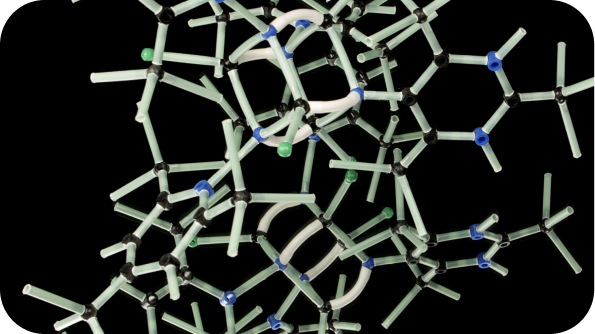
Recombination shapes genetic effects on fitness. Modified from Livnat et al., “Sex, mixability and modularity,” Proceedings of the National Academy of Sciences USA, 107:1452-7.
Since Darwin, there have been two main ways of thinking about the fundamental nature of mutation and thus about how evolution happens. One has been random mutation and natural selection. According to it, the causes of mutation include radiation, replication errors, oxidative stress, etc. and are not important for our understanding of how evolution happens at the fundamental level. The second view, Lamarckism, argues that the organism can respond with beneficial genetic change directly to its immediate environment, but has difficulties explaining evolution beyond limited cases.
Livnat’s theory of Interaction-based Evolution argues instead that complex genetic interactions affect the probabilities of origination of mutations in a mutation-specific manner, and that these complex genetic influences are shaped by gradual adaptive evolution and vice-versa. This theory is distinct from the modifier theory of mutation rates in that it argues for genetic influences on mutation rates that are complex and mutation specific. We have been testing this theory empirically using novel, advanced methodologies. See our recent paper published in Genome Research, showing that the malaria-resistant HbS mutation originates more rapidly in the gene and in the population where it is of adaptive significance, thus providing first evidence of mutation origination that cannot be explained by traditional theory.
The study of mutational mechanisms is important not only for evolutionary biology but also for other fields, such as cancer. Cancer is a disease caused by mutations, and a better understanding of the fundamental nature of mutation may lead to further insights on cancer.
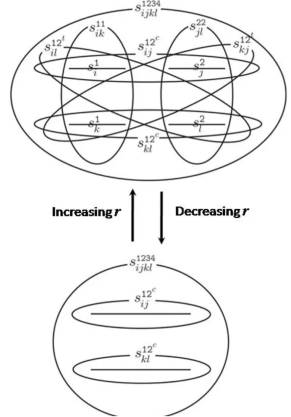
Recombination shapes genetic effects on fitness. Modified from Livnat et al., “Sex, mixability and modularity,” Proceedings of the National Academy of Sciences USA, 107:1452-7.

Recombination shapes genetic effects on fitness. Modified from Livnat et al., “Sex, mixability and modularity,” Proceedings of the National Academy of Sciences USA, 107:1452-7.

The mixability theory for the role of sexual recombination in evolution
For nearly a century, theoretical research on the role of sexual recombination in biological evolution has been guided by a tacit assumption that sex should somehow facilitate the increase in the population mean fitness measure as defined in population genetic models, even though this measure does not explicitly represent biological structure. The mixability theory for the role of sexual recombination in evolution argues instead that, by shuffling the genes, sexual recombination shifts the “focus” of natural selection from favoring particular genetic combinations of high fitness to favoring genes that perform well across many different genetic combinations. Thus, the interaction between sex and natural selection generates modular genetic elements that are simple and robust and are able to form novel genetic interactions.